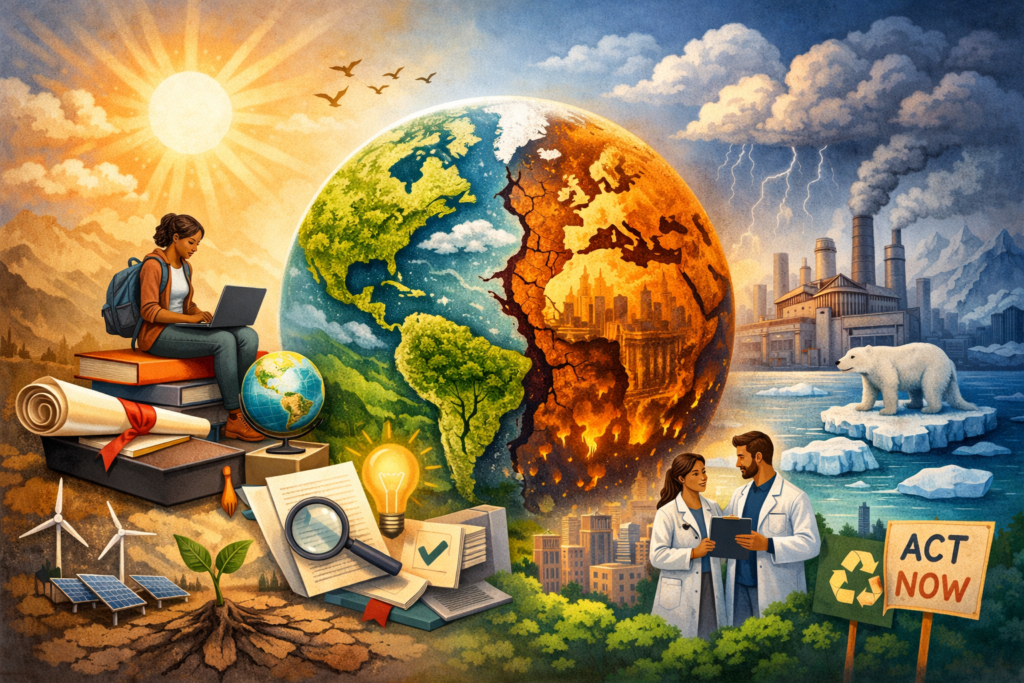
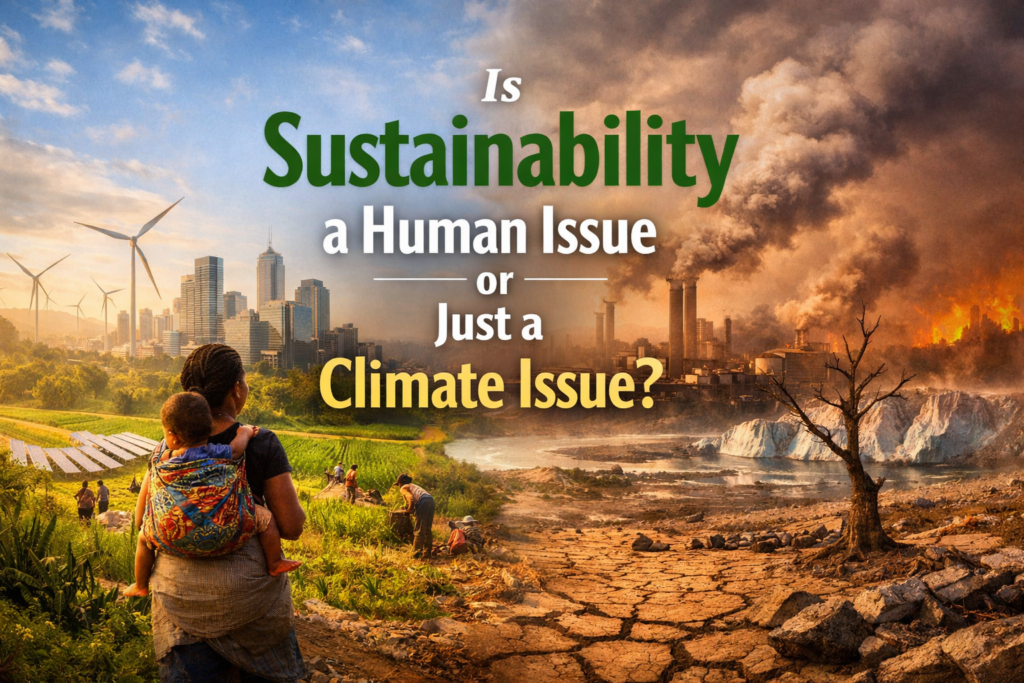
When conversations about sustainability begin, they often start with the climate. Rising temperatures, melting ice caps, and extreme weather dominate headlines, creating the impression that sustainability is primarily about carbon emissions and atmospheric science. Yet, behind every environmental crisis lies a quieter but more powerful force: human decision-making.
Long before climate change became a global concern, societies were already shaping the environment through the way they built cities, managed land, extracted resources, and defined development. Forests were cleared to fuel growth, rivers were redirected to support industry, and economic success was measured by how much could be produced and consumed. These choices were not accidents of nature. They were deliberate human decisions rooted in values, priorities, and systems of power.
Sustainability, at its core, asks a deeply human question. How do we live well today without undermining the ability of others and future generations to do the same? This question cannot be answered by climate science alone. It requires an examination of how societies organize themselves, how wealth is distributed, whose voices are heard in decision-making, and which lives are considered expendable in the pursuit of progress.
Climate change is often described as the defining challenge of our time, but it is better understood as a warning signal. It reveals the consequences of development models that prioritize short-term gain over long-term balance. When sustainability is framed only as a climate issue, solutions tend to focus on technical fixes such as renewable energy or emission targets, while leaving deeper social and economic structures unchanged. As a result, climate policies may exist on paper, yet struggle to transform everyday realities.
In many communities, the impacts of climate change are not experienced as abstract temperature increases but as lost livelihoods, food insecurity, flooding, and displacement. These impacts are shaped not only by environmental factors but by social conditions such as poverty, inequality, and weak governance. Two regions may face the same climate hazard, yet experience vastly different outcomes depending on the strength of institutions, access to resources, and inclusion in decision-making processes. This is where sustainability reveals its human dimension most clearly.
Sustainability also challenges the idea that environmental protection can be separated from social justice. A transition to clean energy that excludes workers or marginalizes vulnerable groups cannot be considered sustainable. Policies that protect ecosystems while displacing communities without consent create new forms of injustice. True sustainability demands that environmental goals be pursued alongside fairness, dignity, and inclusion.
Every environmental outcome is ultimately shaped by human systems. Laws determine what is permitted, markets influence what is profitable, and institutions decide who benefits and who bears the cost. Even technological innovations are not neutral. They reflect human priorities and political choices. Without accountability, participation, and ethical governance, technology alone cannot deliver sustainability.
Viewing sustainability as a human issue reshapes how solutions are imagined. It shifts attention from isolated climate interventions to the broader systems that govern everyday life. It emphasizes the importance of inclusive policies, long-term planning, and local knowledge. It also explains why many well-intentioned sustainability initiatives fail when they overlook the social realities on the ground.
So, is sustainability a human issue or just a climate issue? The answer becomes clear when the story is fully told. Sustainability is fundamentally about how humans choose to live, govern, and share resources on a finite planet. Climate change is one of the most visible consequences of unsustainable choices, but it is not the root cause. When sustainability begins with people, climate action becomes more meaningful, resilient, and just.