
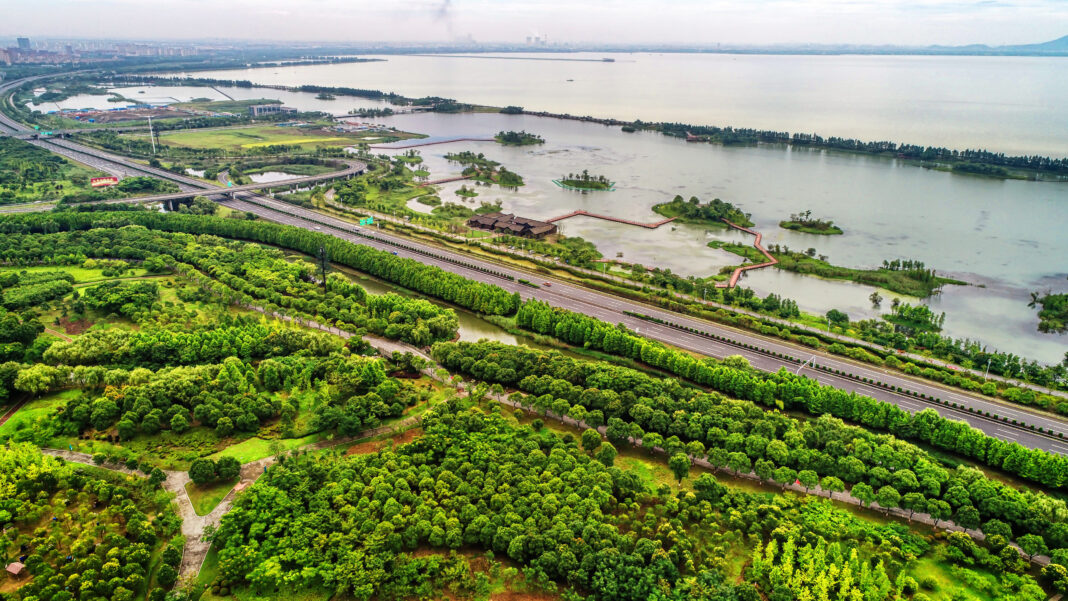
When people think about tackling climate change, forests often come to mind. Yet beneath our feet lies another ecosystem that is just as important, if not more powerful, in regulating the planet’s climate. Peatlands, though less visible and often overlooked, play a critical role in storing carbon and maintaining environmental balance.
What makes this even more striking is that scientists have not yet identified all of them.
What Are Peatlands and Why Do They Matter?
Peatlands are a type of wetland formed over thousands of years from layers of partially decomposed plants. Because these areas are waterlogged, the process of decomposition slows down, allowing carbon to accumulate and remain stored in the soil for long periods.
This makes peatlands incredibly important. Although they cover only a small portion of the Earth’s surface, they store more carbon than all the world’s forests combined. According to the https://iucn.org/resources/issues-brief/peatlands-and-climate-change, peatlands are among the most efficient natural carbon stores on the planet.
However, this balance is delicate. When peatlands are drained, burned, or disturbed, they release the carbon they have stored over centuries. Instead of helping the climate, they begin to worsen it.
Why Have All Peatlands Not Been Found?
It may seem surprising that such important ecosystems are not fully mapped, especially in a time of advanced technology. However, peatlands are often difficult to identify.
Many are located in remote or hard to access regions such as tropical forests or northern landscapes. Others are hidden beneath dense vegetation or resemble other land types, making them difficult to detect using standard mapping methods.
Even with satellite technology, there are still gaps in our understanding. Research published on https://theconversation.com/peatlands-are-vital-for-tackling-climate-change-yet-scientists-still-havent-found-them-all-279578 , highlights that scientists continue to discover previously unknown peatland areas, particularly in tropical regions.
This creates a serious challenge. If we do not know where peatlands are, it becomes difficult to include them in conservation efforts or climate policies.
A Hidden Climate Risk
The uncertainty around peatland locations creates a quiet but serious risk.
When these areas are disturbed through farming, construction, or resource extraction, the carbon stored over thousands of years can be released into the atmosphere. This can happen quickly and on a large scale, turning peatlands from climate protectors into major sources of emissions.
At the same time, only a small portion of peatlands worldwide is currently protected. Reports from platforms such as https://news.mongabay.com/2025/02/only-17-of-peatlands-vital-to-curbing-climate-change-are-protected-study-finds/ suggest that a significant percentage of peatlands remain unprotected, leaving them vulnerable to degradation.
In some cases, peatlands are also drying out due to changing environmental conditions, increasing the likelihood of fires and further carbon release. Once degraded, they are extremely difficult to restore because they take so long to form.
More Than Just Carbon Storage
Peatlands do more than store carbon. They also play an important role in supporting ecosystems and human life.
They help regulate water systems, reducing the risk of flooding and maintaining water quality. They also provide habitats for unique plant and animal species, many of which depend on these environments to survive.
According to the IUCN, https://iucn.org/resources/issues-brief/peatlands-and-climate-change, peatlands are essential not only for climate regulation but also for biodiversity and ecosystem stability.
Why Peatlands Matter for Climate Action
Peatlands represent one of the most effective natural solutions for addressing climate change. Protecting them prevents large amounts of carbon from being released without the need for complex technology.
Despite this, they are still not given enough attention in global climate strategies.
The fact that many peatlands remain undiscovered highlights a broader issue. Effective climate action depends on understanding and managing natural systems properly. Without accurate knowledge, important opportunities for protection are missed.
Rethinking Climate Solutions
Peatlands challenge the way we think about climate solutions. Not all solutions require new inventions or large scale interventions. Some already exist in nature, quietly performing essential functions over long periods.
What they require is recognition and protection.
As efforts to address climate change continue, peatlands offer both an opportunity and a warning. Protecting them can significantly reduce emissions. Ignoring them could accelerate environmental damage.
The challenge is clear.
We must identify, understand, and protect peatlands before more of them are lost.
Is Sustainability a Human Issue or Just a Climate Issue?
When conversations about sustainability begin, they often start with the climate. Rising temperatures, melting ice caps, and extreme weather dominate headlines, creating the impression that sustainability is primarily about carbon emissions and atmospheric science. Yet, behind every environmental crisis lies a quieter but more powerful force: human decision-making.
Long before climate change became a global concern, societies were already shaping the environment through the way they built cities, managed land, extracted resources, and defined development. Forests were cleared to fuel growth, rivers were redirected to support industry, and economic success was measured by how much could be produced and consumed. These choices were not accidents of nature. They were deliberate human decisions rooted in values, priorities, and systems of power.
Sustainability, at its core, asks a deeply human question. How do we live well today without undermining the ability of others and future generations to do the same? This question cannot be answered by climate science alone. It requires an examination of how societies organize themselves, how wealth is distributed, whose voices are heard in decision-making, and which lives are considered expendable in the pursuit of progress.
Climate change is often described as the defining challenge of our time, but it is better understood as a warning signal. It reveals the consequences of development models that prioritize short-term gain over long-term balance. When sustainability is framed only as a climate issue, solutions tend to focus on technical fixes such as renewable energy or emission targets, while leaving deeper social and economic structures unchanged. As a result, climate policies may exist on paper, yet struggle to transform everyday realities.
In many communities, the impacts of climate change are not experienced as abstract temperature increases but as lost livelihoods, food insecurity, flooding, and displacement. These impacts are shaped not only by environmental factors but by social conditions such as poverty, inequality, and weak governance. Two regions may face the same climate hazard, yet experience vastly different outcomes depending on the strength of institutions, access to resources, and inclusion in decision-making processes. This is where sustainability reveals its human dimension most clearly.
Sustainability also challenges the idea that environmental protection can be separated from social justice. A transition to clean energy that excludes workers or marginalizes vulnerable groups cannot be considered sustainable. Policies that protect ecosystems while displacing communities without consent create new forms of injustice. True sustainability demands that environmental goals be pursued alongside fairness, dignity, and inclusion.
Every environmental outcome is ultimately shaped by human systems. Laws determine what is permitted, markets influence what is profitable, and institutions decide who benefits and who bears the cost. Even technological innovations are not neutral. They reflect human priorities and political choices. Without accountability, participation, and ethical governance, technology alone cannot deliver sustainability.
Viewing sustainability as a human issue reshapes how solutions are imagined. It shifts attention from isolated climate interventions to the broader systems that govern everyday life. It emphasizes the importance of inclusive policies, long-term planning, and local knowledge. It also explains why many well-intentioned sustainability initiatives fail when they overlook the social realities on the ground.
So, is sustainability a human issue or just a climate issue? The answer becomes clear when the story is fully told. Sustainability is fundamentally about how humans choose to live, govern, and share resources on a finite planet. Climate change is one of the most visible consequences of unsustainable choices, but it is not the root cause. When sustainability begins with people, climate action becomes more meaningful, resilient, and just.